
Understanding the subsurface: inside Aramco’s Core Laboratories Center
Bringing together decades of geological samples and knowledge, Aramco’s Core Laboratories Center supports the Company’s analysis and understanding of what lies beneath the surface.
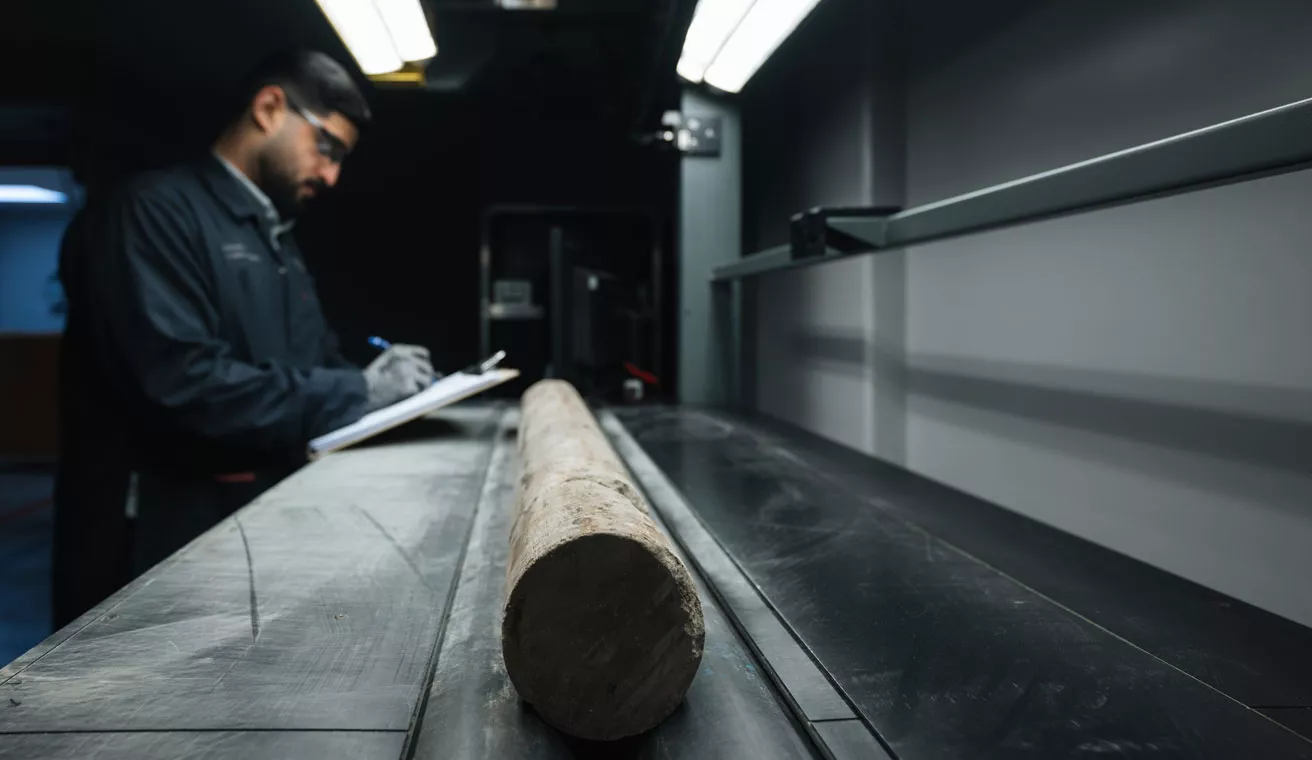
- The Core Laboratories Center analyzes rock samples, collected during drilling, to support exploration and drilling decisions in real time
- Advanced technologies and structured workflows enable rapid, accurate assessment of key rock properties
- An archive of core samples dating back to 1936 supports long-term geological studies
Aramco’s exploration journey began in 1933, when our geologists first started studying the unique geology of Saudi Arabia’s Eastern Province, reading rock formations and outcrops as clues to the resources that lay beneath. These early observations led to the discovery of oil at Dammam Well No. 7 in 1938, marking the start of decades of exploration across the Kingdom’s vast and varied landscapes.
Since then, exploration has evolved from surface observations to advanced, data-driven methods that combine geological insight with imaging, modeling, and other technologies to better understand the subsurface. At the heart of these efforts is the Core Laboratories Center, a centralized facility where core samples — cylindrical sections of rock extracted during drilling — are processed, analyzed, interpreted, and preserved. By examining the structure, and the physical and chemical properties of these samples, the Center provides critical data that supports exploration decisions and field development plans, while also maintaining a long-term archive of geological information built over decades of drilling activity.
How Core Labs evolved
The story of the Core Laboratories Center evolved alongside our exploration journey. In the early years, core samples were collected during drilling and stored across multiple locations, which had limited capability for detailed analysis. As exploration expanded and became more complex, so did the need for a more structured and integrated approach to managing these samples.
This led to the establishment of a dedicated core storage facility in 1981, bringing together core samples in one place and introducing the first laboratory capabilities to support their analysis. While modest in scope, this facility grew to incorporate advanced technologies, deeper integration with geoscience disciplines, and a greater role in supporting exploration activities, laying the foundation for what would later become the Core Laboratories Center.

The Core Laboratories Center in Dhahran.
Over the years, the Center has evolved into a fully integrated laboratory, marked by the inauguration of a new facility in 2024. What began as a storage repository has since grown to have a more active role, where core samples are not only preserved but also continuously examined and interpreted using advanced analytical tools.
As of 2026, 150+ employees work at the Core Lab facility. Our team spans experienced geoscientists and senior geological researchers to lab technicians, maintenance specialists, and other experts. We also partner with engineers from Upstream to evaluate and interpret Core Lab data.
As a result, the Center remains closely tied to our exploration efforts, supporting a deeper and more consistent understanding of the subsurface.
How core samples support operational decision-making
While seismic data provides an initial coarse picture of what lies beneath the surface, it relies on signals and interpretations rather than direct evidence. Core samples help bridge the gap between seismic interpretations and concrete geological insights. They are collected during the exploratory drilling phase, offering the first direct evidence of the reservoir architecture and allowing geoscientists to validate assumptions and better understand the geology in actual conditions.
Core samples are typically transported to the Center within hours of being recovered, and a structured examination workflow begins upon arrival. Each sample is first cleaned and depth-marked to ensure accurate alignment with drilling data. It is then documented using high-resolution photography and tested with specialized tools. One such tool is the Core Spectral Gamma Logger, which measures the natural radioactivity of rock samples collected from the ground, helping geologists identify rock types and map underground formations. Where required, additional technologies, such as 3D X-ray imaging, high-resolution nuclear magnetic resonance, or multi-sensor core logging, are used to provide further insight into the rock’s internal structure, composition, and fluid distribution.
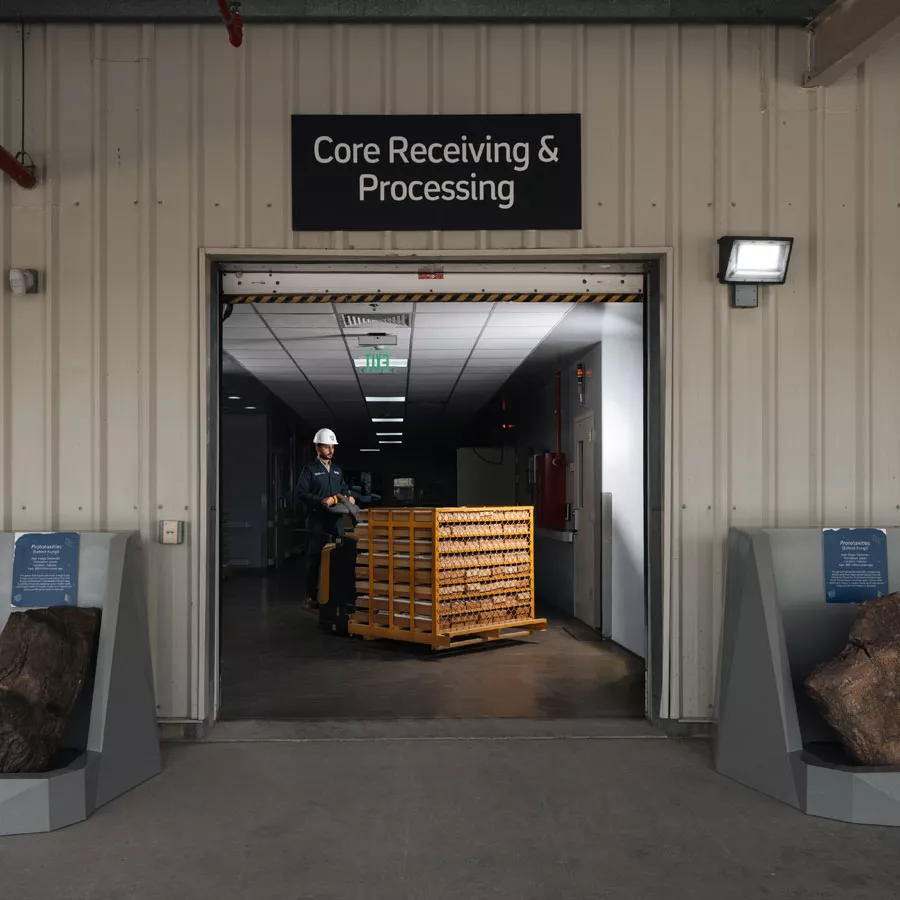
Core samples are received and prepared for analysis.
Our scientists then take the subsamples through a plugging process and analyze them to determine key rock properties. Among the most important are porosity, which indicates the amount of space within the rock that can be occupied by hydrocarbons, and permeability, which measures the ability of fluids to flow through the rock. These properties are used to assess reservoir quality, resources, and flow potential.
For the Company, these measurements are central to fast, strategic decision-making. If porosity and permeability values meet the required thresholds, the reservoir may be considered viable and drilling continues. If they fall below expectations, the findings may support a decision to adjust or halt drilling operations. In this way, core analysis provides a direct input into “go/no-go” decisions during exploration.
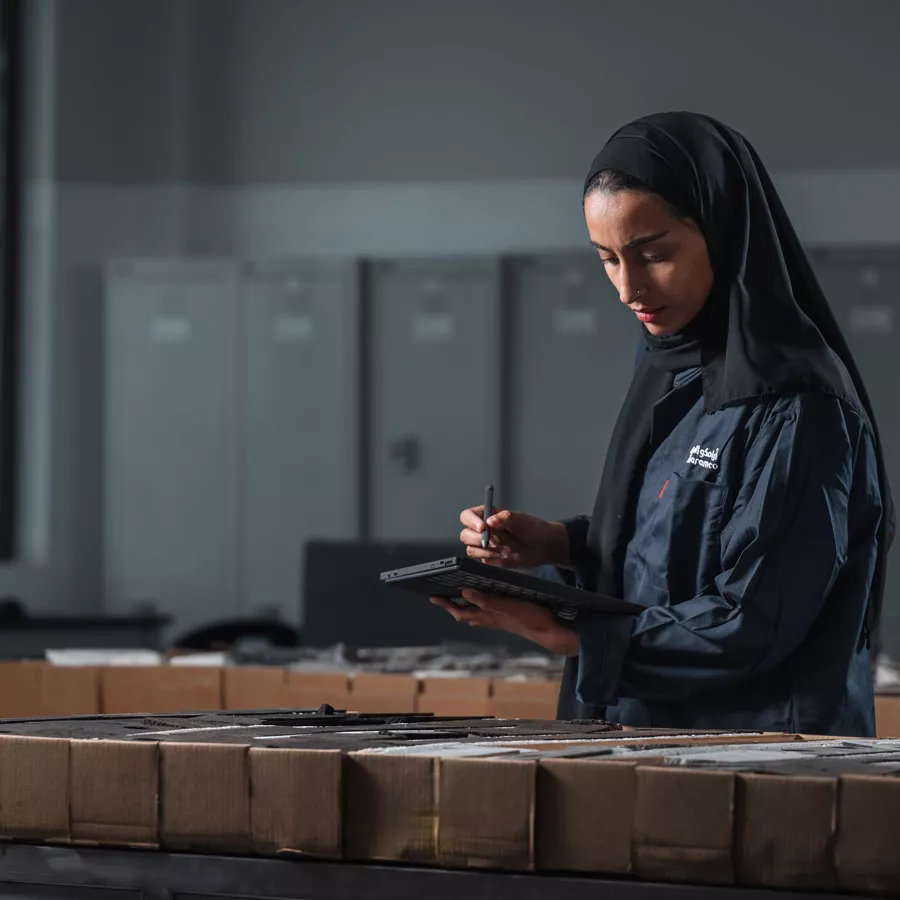
Core samples are cleaned and then documented using advanced tools.
Timing plays a critical role in this process. Initial analysis can often be completed within hours of a sample arriving, allowing teams to respond quickly during drilling operations and save valuable rig time. This rapid turnaround supports timely decisions and can help reduce costs and risks by identifying potential issues early.
Core data also supports the interpretation of subsurface conditions. When differences arise between seismic data and observed results from the wells, core analysis provides additional information to help clarify the geological picture and guide further investigations.
Utilizing advanced technologies for core measurement
The Center’s operations are supported by a range of technologies that improve the accuracy and efficiency of core analysis.
Imaging and measurement tools are used to capture both the external and internal characteristics of each sample. Hyperspectral imaging — which detects subtle differences in how rocks reflect light to help identify their composition — along with high-resolution photography provide a detailed visual record, while CT scanning, and other similar techniques, allow for non-destructive analysis of internal structures. Additional tools, such as multi-sensor core loggers and mineral analysis systems, provide further data on the rock’s physical and chemical properties.
A high-resolution nuclear magnetic resonance system is used to analyze fluid types and their distribution within the core, adding another layer of detail to the overall assessment. Together, these technologies help provide a comprehensive understanding of each sample and support informed interpretation.
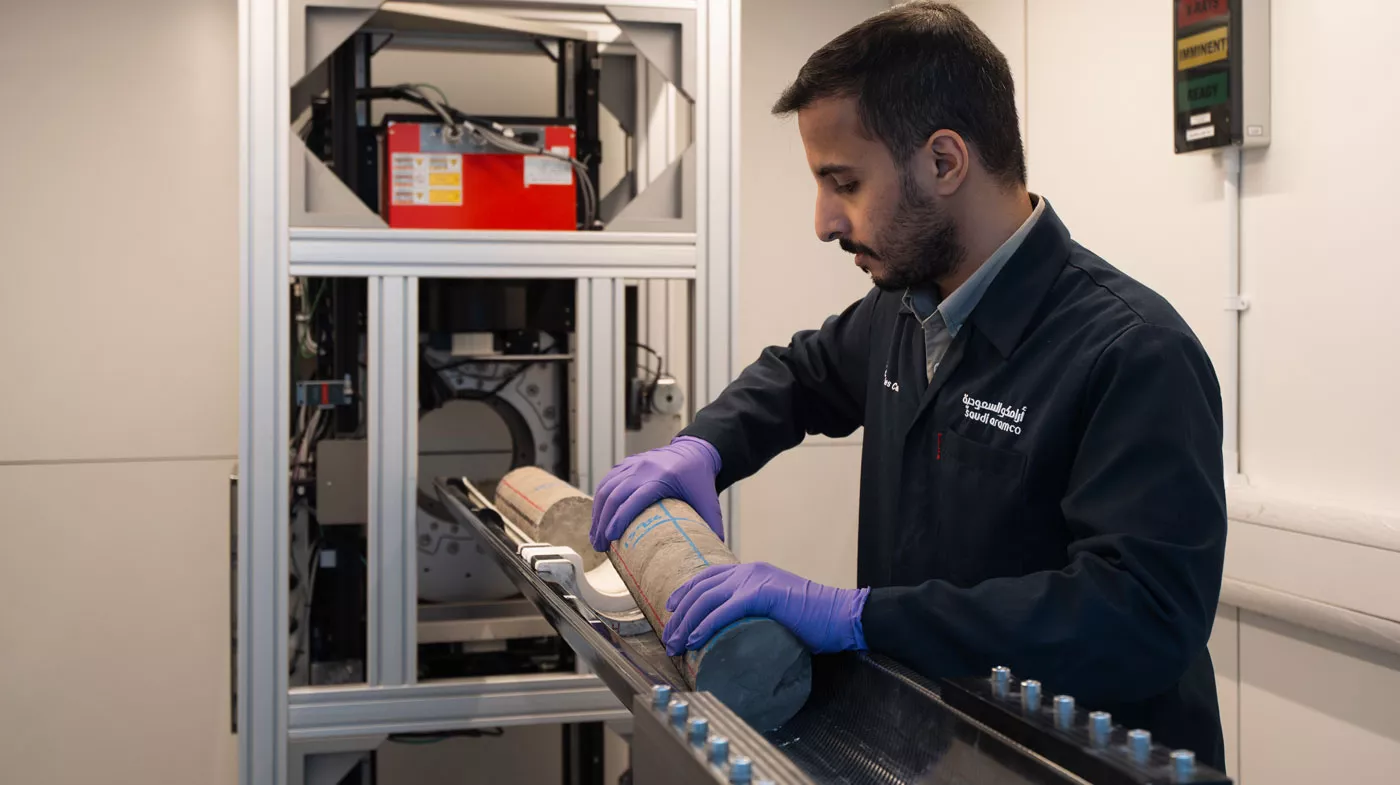
Using cutting edge-technologies to analyze core samples is helping unlock new insights and discoveries.
The Center integrates this wealth of data into digital platforms used across the exploration, petroleum engineering, and research teams. Information generated from core analysis can be uploaded into geological and petrophysical software, where it contributes to subsurface models and interpretation workflows. Efforts are underway to apply machine learning techniques to these datasets, further supporting rapid and consistent analysis and interpretation.
Additionally, automation has been introduced to improve the Core Laboratories Center’s workflows. The Robotic Core Retrieval System, for example, enables the safe and efficient movement of core samples from storage to examination areas. By reducing the need for manual handling of heavy core containers, the system enhances safety while improving access to archived samples.
“Leveraging cutting-edge technologies coupled with rich legacy data, we are gaining new insights and building on discoveries that allow us to realize value that was not previously recognized through digitization and emerging technologies, and contribute to the ongoing evolution of our industry in the process.”
Samer S. Al Ashgar, Senior Vice President of Exploration
A shared archive of geological knowledge
The facility’s dedicated 6-level storage space, which is approximately 7,000 square meters, houses an extensive archive of core material, estimated at more than 1 million feet of samples. Each sample is stored within a structured racking system and recorded in a digital database, enabling accurate tracking and retrieval. This allows geoscientists to revisit previously collected cores and reanalyze them with the latest technologies, enabling new studies without the need for additional drilling or coring.
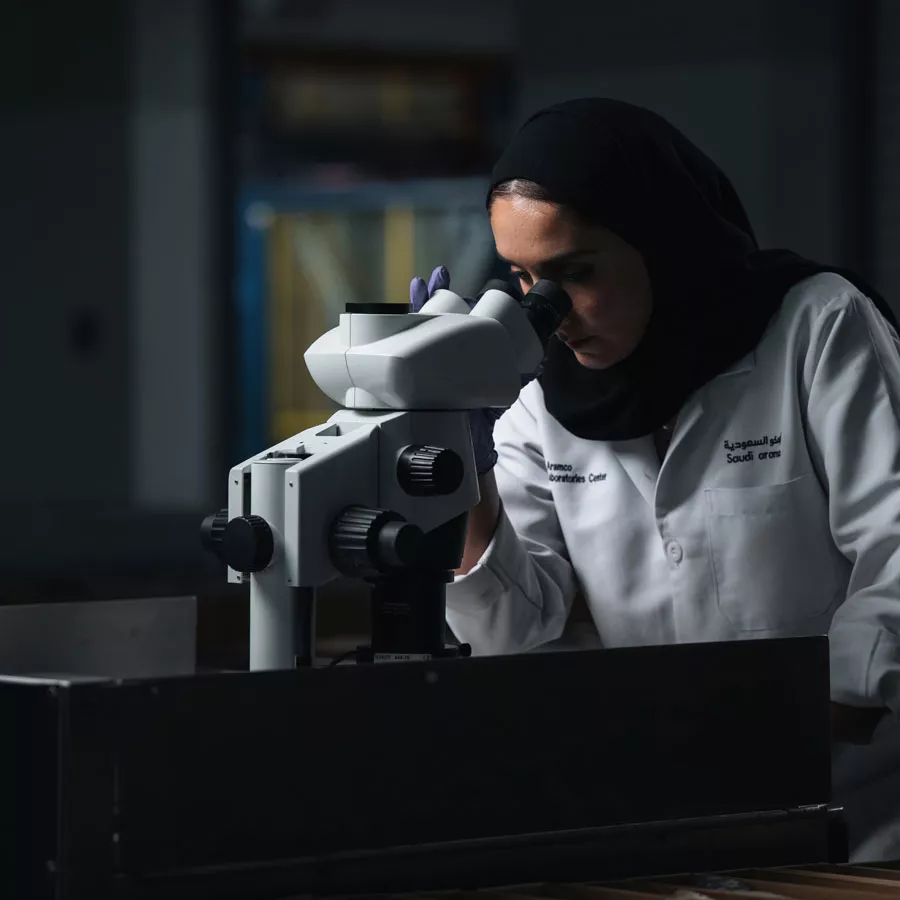
Detailed analysis supports a better understanding of subsurface geology.
The Center is also designed to support collaboration. Geologists, petroleum engineers, and researchers can access its facilities and request specific services based on their study requirements. Examination areas and laboratory spaces are structured to accommodate multiple users, enabling coordinated analysis and interpretation.
Collaboration extends across the Company, including working with Exploration, Petroleum Engineering, and Upstream Advanced Research Center, as well as with out-of-Company specialized centers focused on digital solutions and advanced studies. This integrated approach supports knowledge sharing and helps translate data into practical business outcomes.
Shaping the future of exploration
The ongoing deployment of advanced rock analysis technologies has enabled the transition from a traditional physical core archive to a digitally enabled, Artificial Intelligence (AI)-supported geological knowledge platform, creating new capabilities that were previously unattainable. Historically, core interpretation relied on manual observations, specialist expertise, and limited sampling programs. While highly valuable, these approaches were constrained by time, accessibility, and the amount of information that could be extracted from large core inventories.“The center's advanced facilities and expertise enable us to extract greater value from core samples and deepen our understanding of subsurface geology.”
Munahi Otiebi, Director of Geological Operations Department
Through digitization and multiscale rock imaging, every millimeter of core can now be systematically captured, measured, and preserved as a permanent digital record. Features that were previously overlooked due to scale limitations or time constraints are now identified, quantified, and tracked across entire fields, basins, or mineral districts. AI algorithms simultaneously evaluate millions of geological attributes, recognizing patterns in the rocks’ composition, structure, physical characteristics, and chemical properties. As a result, we have gained the ability to identify previously unrecognized controls on reservoir quality or rock mineralization. The resulting insights support evaluations of exploration opportunities, field development plans, and long-term reservoir and mineral recovery strategies.
The integration of multiscale imaging and AI has also enabled the development of digital rock libraries and geological knowledge graphs, where rock samples, images, analytical results, interpretations, and production outcomes are interconnected. Teams can identify reservoir sweet spots more accurately, forecast reservoir behavior with greater confidence, and reduce uncertainty in exploration and development decisions.
As both a center of scientific analysis and a repository of geological knowledge, the Aramco Core Laboratories Center plays a vital role in connecting the Company's past, present, and future. Through the expertise of its people and the technologies that support their work, the center continues to unlock the secrets of the subsurface, transforming rock samples into valuable data that provide insights that advance understanding and support informed decision-making across the organization.
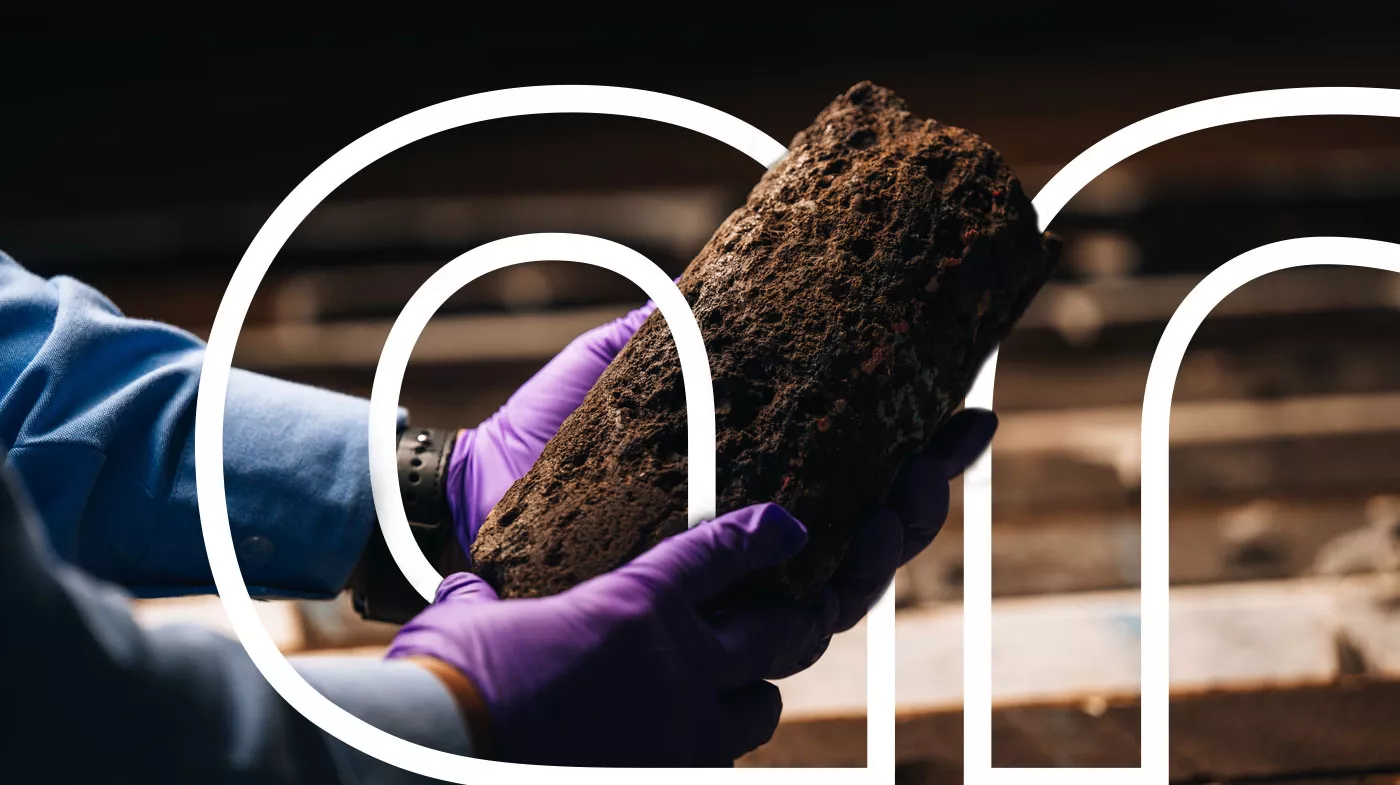
Core samples continue to provide valuable geological insights for exploration.
The information in this article is provided for general informational purposes only and it reflects information available at the time of publication. It may be subject to change, and Saudi Aramco does not undertake any obligation to update or revise this content following publication.