
Safaniyah: Aramco’s first step offshore
In 1951, we drilled our first offshore wildcat well at Safaniyah, laying the foundation for what we believe is the world’s largest conventional offshore oil field.
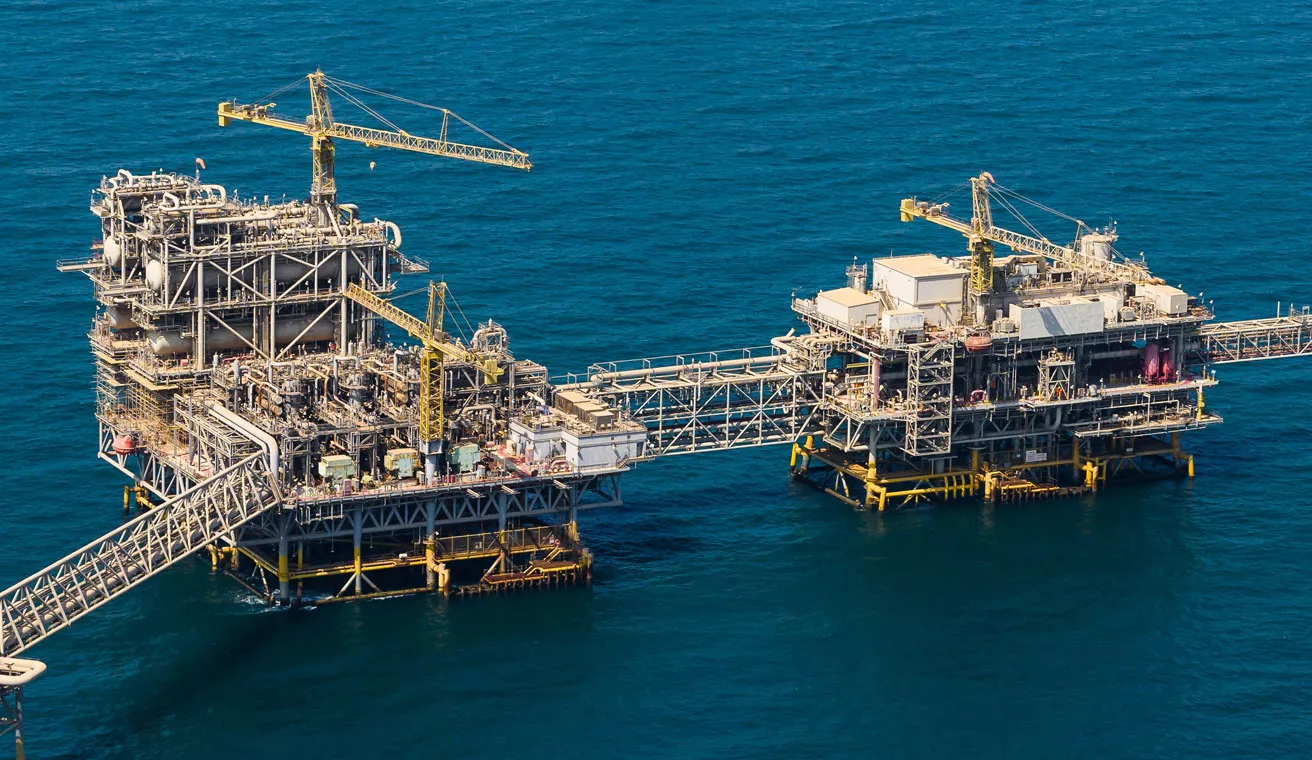
- Following years of geological assessment, Safaniyah was chosen as our first offshore drilling site
- Field development progressed in stages, with production commencing in 1957 following the completion of necessary offshore infrastructure
- Over the years, Safaniyah has expanded into what we believe is the world’s largest conventional offshore oil field
By the 1940s, nearly a decade after oil was discovered in Saudi Arabia, Aramco had firmly established itself as an onshore operator in the Eastern Province. Years of production and geological studies had given our exploration teams an extremely detailed understanding of the Kingdom’s subsurface geology and growing confidence in identifying potential hydrocarbon formations.
Around this time, geological assessment indicated that oil-bearing structures extended offshore into the Arabian Gulf, setting the stage for the next phase of exploration. Building upon these onshore findings, in the mid-1930s, Aramco geophysicist Dick Kerr began examining the shallow waters off Saudi Arabia’s northern Gulf coast. Drawing on experience from aerial surveying and seismographic work, Kerr identified an offshore structure he believed required further investigation.
In 1939, he identified the location of Safaniyah by marking a map with a red arrow and a note: ‘Possible high area offshore.’ This observation was added to the Company’s geological records for future consideration without any immediate operational plan.
Safaniyah takes shape
By 1950, growing geological evidence pointed to Safaniyah as a promising site for offshore exploratory drilling. This is why, during the same year, we built our first offshore drilling platform approximately 3 km offshore and about 225 km north of Dhahran. Water depth in the area averaged around 22 meters, making offshore drilling feasible.
During early development, the fixed-platform drilling system was used. Heavy steel piles were driven into the seabed to support each platform, with a drilling rig and derricks mounted, and later dismounted, when wells were completed — a time-consuming and costly procedure.
While the shallow water reduced some technical barriers, offshore operations presented new challenges: equipment had to be transported by sea, platforms had to be installed offshore, and crews had to adapt from desert environments to confined, constantly moving marine worksites. Moreover, operating at sea required closer coordination between drilling teams and marine support, as well as more responsive day-to-day planning.
The first offshore well
Amid these challenges, offshore exploration continued, guided by geological data from onshore and coastal surveys, with drilling at Safaniyah carefully planned as a logical extension of ongoing land exploration. The objective was clear: to determine whether drilling operations could be carried out reliably in shallow offshore waters using equipment and logistics available at the time.After more than 200 days of drilling, the offshore wildcat or exploration well, Safaniyah No. 1 (SFNY-1), was completed on August 15, 1951. Crude oil flowed into a barge positioned several hundred yards from the platform, as offshore pipeline infrastructure had not yet been developed.
In addition to confirming the presence of hydrocarbons beneath the Gulf, the wildcat well demonstrated that offshore drilling could be managed safely and effectively. This result enhanced our early understanding of offshore operations.
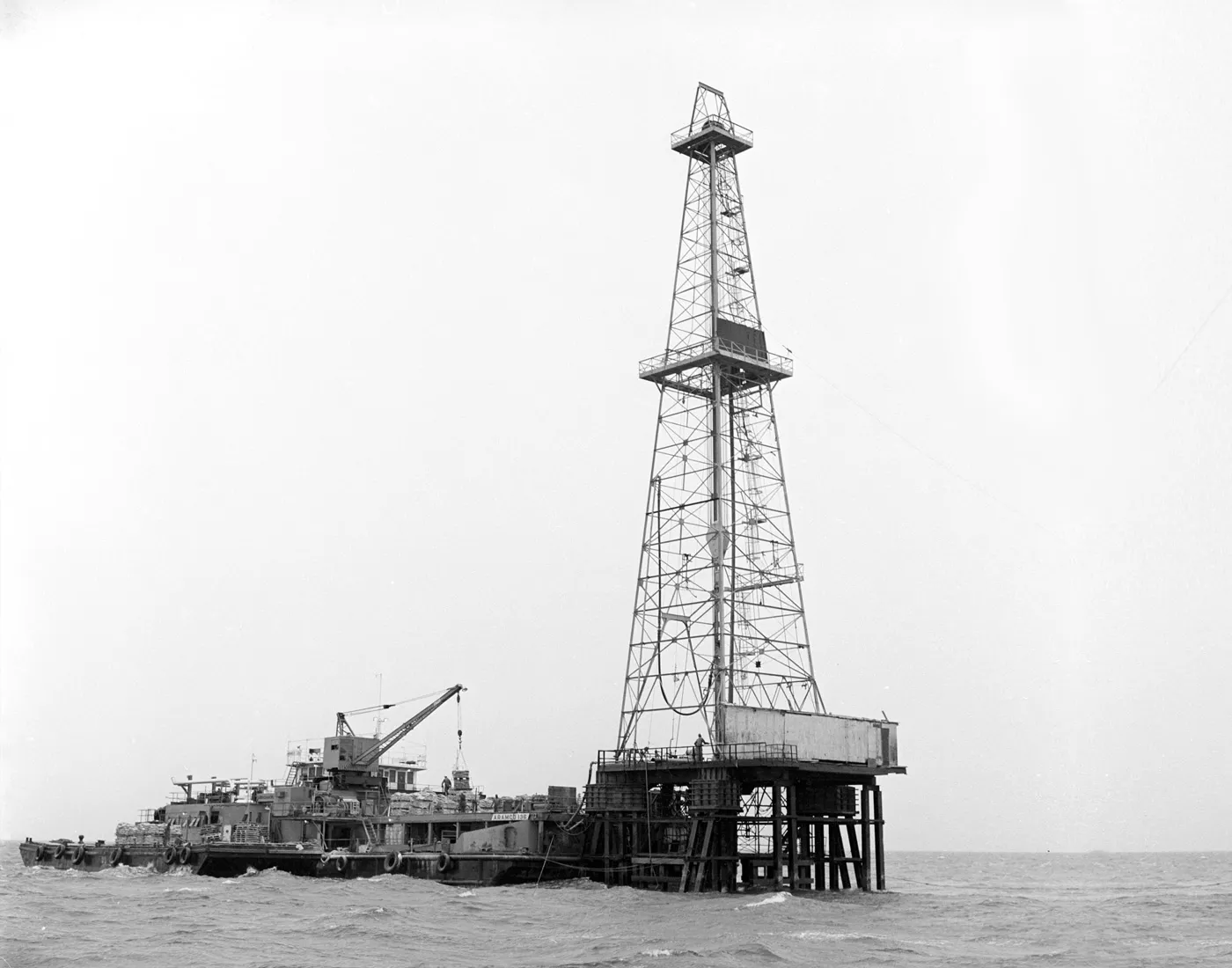
Drilling at Safaniyah in the 1950s.
From validation to sustained development
Several exploration wells were drilled through the early 1950s, which helped improve our knowledge of the area; however, production did not immediately follow. Instead, well appraisal work was prioritized while offshore facilities were constructed to support long-term operations. Well appraisal is the process of drilling additional wells after a hydrocarbon discovery to determine the size, quality, and economic viability of the reservoir. It bridges the gap between exploration (finding oil) and development (producing oil), aiming to define the field's boundaries, volume, and flow characteristics to minimize investment risk. Between 1951 and 1954, a total of 17 appraisal wells were drilled as part of this assessment phase.In 1954, plans were finalized to construct facilities to bring Safaniyah into production, with a target start date set for 1957. Safaniyah entered production on schedule in mid-April 1957, with an initial output of about 50,000 barrels per day (bpd) from 18 wells.
As operations continued, procedures were refined with experience. Early offshore crews developed practical methods for handling routine tasks, supporting safe operations, and coordinating efforts in a marine environment. Lessons learned at Safaniyah were documented and then applied more-widely as the Company’s offshore activity expanded.
Building offshore capability
In the early 1960s, even as the pace of development at Safaniyah slowed compared to previous years, the period marked significant offshore discoveries in the Arabian Gulf. During this time, experience from Safaniyah guided our exploration efforts across the region.
In 1963, we identified the Abu Sa‘fah offshore field. The following year, exploration confirmed the Berri field, part of which extended beneath Gulf waters. Further offshore discoveries followed, including Zuluf in 1965 and Marjan and Karan in 1967.
As offshore production increased throughout the 1960s, supporting systems evolved alongside the drilling facilities. The need to manage larger oil and associated gas volumes required separation closer to the field. Separation in oil and gas is a critical Upstream process that divides the raw mixture extracted from the well into three main components: natural gas, crude oil, and water. This need for separation closer to the field ultimately led to the development of the first offshore gas-oil separation plant (GOSP) in 1969, as documented in our publication, Aramco World. The new GOSP was mounted on three platforms, enabling sustained production by separating oil and gas near the wells. The installed GOSP was then upgraded and electrified with a 42-km, 34.5-kilovolt submarine power cable.
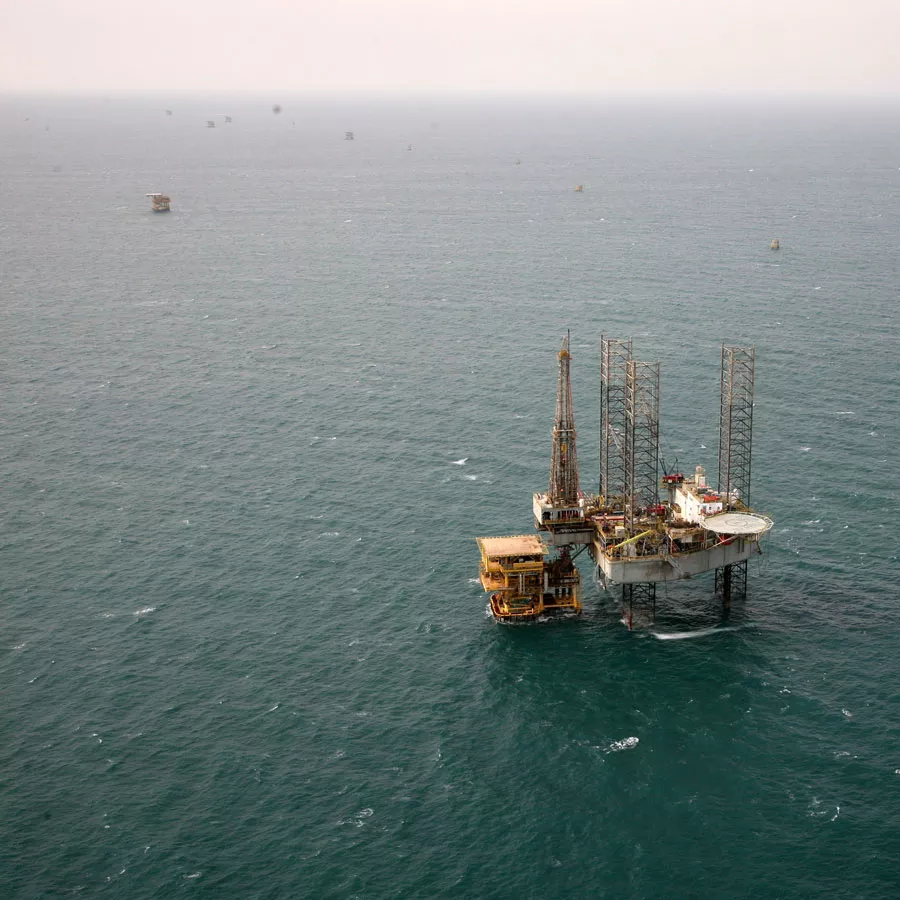
Offshore platforms at Safaniyah reflect decades of growth, innovation, and operational excellence.
Safaniyah in operation
In the following decades, Safaniyah continued to evolve through the installation of two additional offshore GOSPs, onshore facility expansions, and system upgrades that utilized new technologies to enhance the field’s operational efficiency.
Seventy years on, Safaniyah includes four offshore GOSPs (GOSP-1, -2, -3, and -4 respectively) and a major onshore central processing facility, supported by a complex network of more than 750 kilometers of subsea pipelines that connect an array of production platforms, which constitute the field’s backbone.
A long operational arc
Safaniyah’s legacy is best seen as a long operational arc rather than a single defining moment. From early geological observations in the 1930s to the first offshore well completed in 1951, progress was driven by careful assessment, planning, and execution by our teams. This laid the foundation for what we believe is the world’s largest conventional offshore oil field.
The success story of Safaniyah, which was developed and sustained over generations, demonstrates the gradual advancement of our offshore capabilities. More than seven decades after its discovery, Safaniyah continues to connect our earliest offshore efforts with present-day operations in the Arabian Gulf, reflecting a continuity central to our work at sea.
More from Elements
The information in this article is provided for general informational purposes only and it reflects information available at the time of publication. It may be subject to change, and Saudi Aramco does not undertake any obligation to update or revise this content following publication.