

Powered by how
Lower upstream carbon intensity starts with asking the right questions
Aramco is primarily an oil and gas company. Upstream carbon intensity measures emissions from crude oil extraction. Aramco uses technologies and practices to lower these emissions, averaging 9.7 kg CO2e/boe. For industry benchmarks, see OCGI.com1.
As the world demands more energy with fewer emissions, the way oil is produced has never been more important.
At Aramco, we begin by asking how.
How we manage reservoirs.
How we design facilities.
How we reduce flaring, energy use, and methane.
And how we operate at scale while striving to reduce our emissions intensity.
The result is crude oil produced with lower upstream carbon intensity, meaning fewer greenhouse gas emissions per barrel before reaching a refinery.
But carbon intensity isn’t one single factor. It reflects everything it takes to bring a barrel to the surface.
This includes the energy used, the systems in place, and how emissions are managed along the way.
And not all barrels are produced the same way. Around the world, carbon intensity can vary widely depending on geology, infrastructure, and how operations are run. From the very start, how oil is produced shapes its overall emissions profile.
We produce energy at scale, with lower upstream carbon intensity

Producing energy for the world means operating at enormous scale. Millions of barrels per day. Vast infrastructure. Complex systems above and below ground.
What makes Aramco different is how we do it.
- Careful, long-term reservoir management
- Flare minimization across our operations
- Advanced energy efficiency programs
- Rigorous methane detection and repair
- Digital monitoring across operations
Key facts 1
9.7kgCO2e/boe
Aramco
2023
8.6kgCO2e/boe
Aramco
2030 Ambition
17.2kgCO2e/boe
OGCI
Industry average
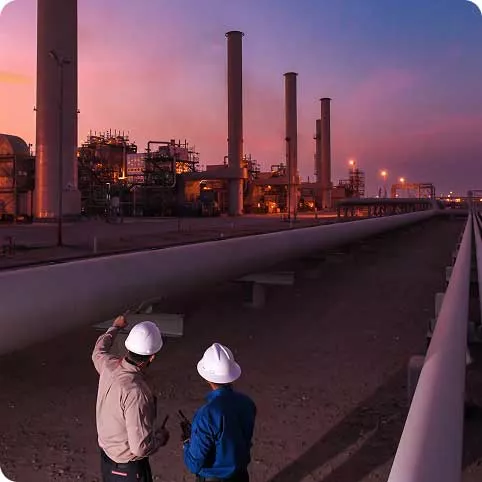
These practices help reduce the energy needed to lift, process, and transport each barrel.
And they are not one-off initiatives. They are part of how we operate every day, built into systems, processes, and standards across one of the world’s largest energy operations.
Lower upstream carbon intensity is not one single action. It is the result of thousands of decisions, repeated consistently, across fields, facilities, and teams.
Going deeper: How lower carbon intensity is achieved
Managing emissions begins below the surface
Lower upstream carbon intensity starts where oil begins, deep underground.
Instead of focusing on short-term output from individual fields, we take a longer-term view. By managing reservoirs carefully and balancing production across large, naturally productive fields, we can reduce water handling, energy use, and flaring over time.3
Advanced subsurface modelling, smart well design, and real-time monitoring all play a role. They help us understand what is happening below the surface and make more informed decisions about how resources are produced.
Because the way a field is managed early on can shape how it performs for decades.
Reducing flaring and methane
We continuously work to reduce methane and flaring emissions by investing in systems that monitor, capture, and make better use of gas.
Our Master Gas System4, flare gas recovery infrastructure, and leak detection and repair programs operate across both onshore and offshore facilities.
These systems are designed to do more than just detect emissions. They help ensure issues are addressed quickly and consistently as part of day-to-day operations, not just occasional interventions.
Methane detection, for example, is supported by regular monitoring and ongoing maintenance. It is a continuous process, not a one-time fix.
These efforts are independently assured and aligned with international reporting frameworks, supporting transparency and consistency. Data shows our upstream methane emissions decreased by 11.4% in 2024.5
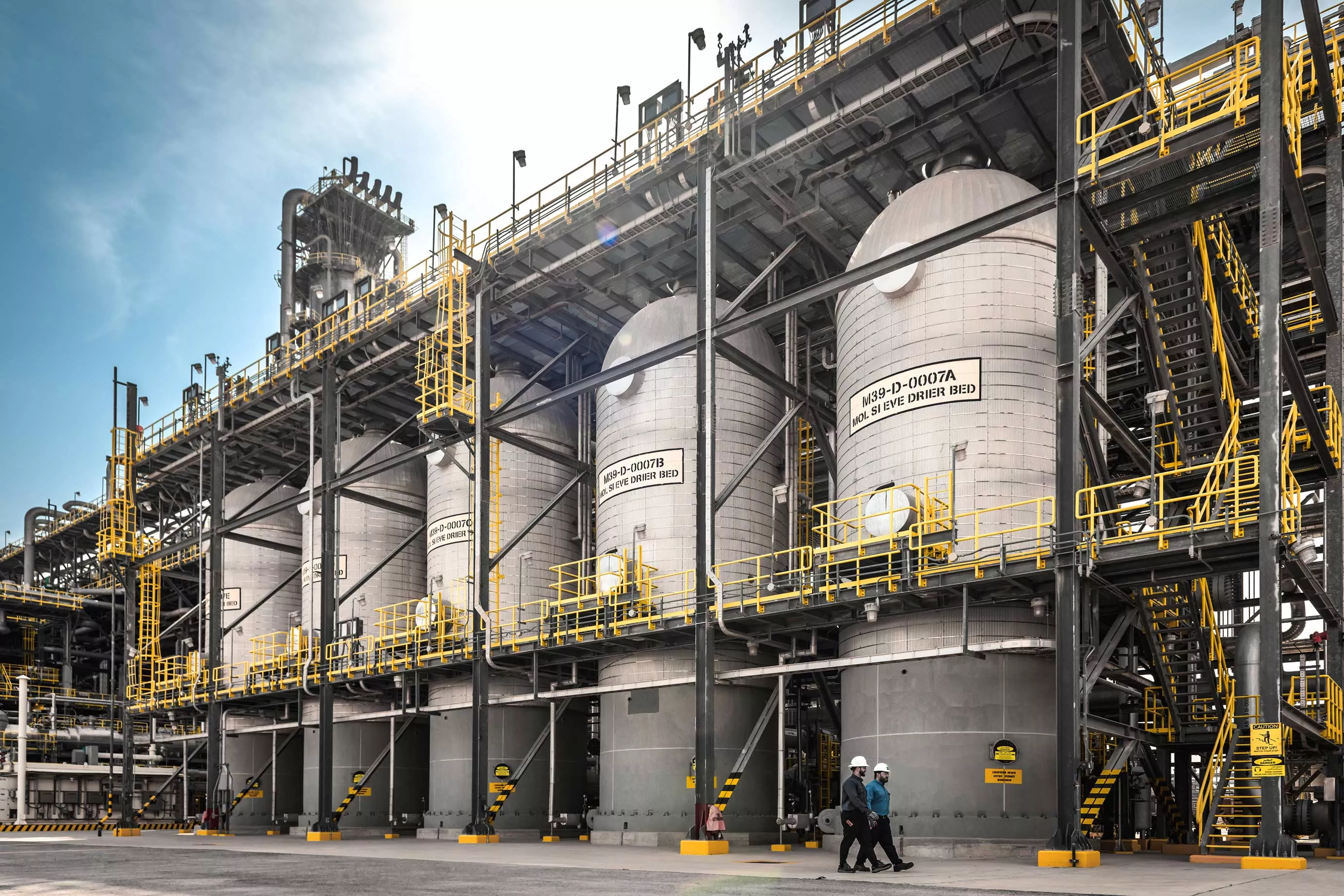
Energy efficiency as a continuous discipline
Lower upstream carbon intensity is also shaped by how efficiently energy is used.
Across our operations, we apply cogeneration, waste heat recovery, and continuous optimization programs to reduce the energy required to produce each barrel.
These are not pilot projects or isolated improvements. They are part of how facilities are designed and run.
Efficiency is something we work on continuously. We monitor performance, make adjustments, and improve over time.
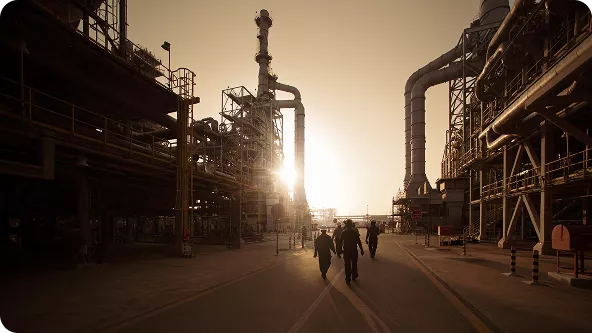
Consistency at scale
Doing all of this at scale requires more than individual technologies. It requires consistency.
Across thousands of wells and facilities, common standards and practices are applied in a consistent way. Digital systems help provide visibility across operations, supporting more informed decisions and more stable performance over time.
It is this consistency, across assets, teams, and processes, that helps turn individual efforts into something larger.

Why it matters, now and next
Carbon intensity is becoming an increasingly important part of how energy is understood.
Research shows that upstream emissions account for much of the difference in carbon intensity between crude oil around the world.
These differences often come down to how oil is produced, the systems in place, the energy used, and the way operations are managed.
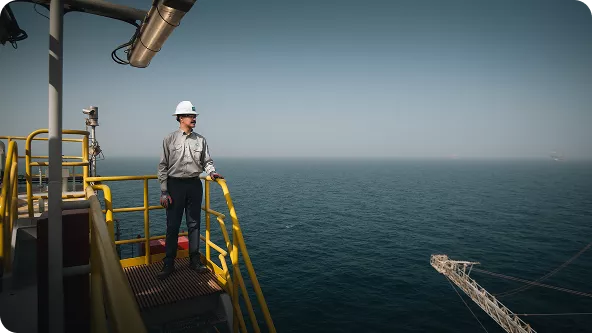
Independent studies have consistently highlighted the comparatively lower carbon intensity of Saudi crude oil, reflecting both geology and operational discipline.6,7
Better measurement and clearer reporting are helping build a more detailed picture of these differences.
At Aramco, that starts with asking how and continuing to ask it every day.
This content is blocked
You need to give permission.

Powered by how
Discover how one simple question how? powers everything we do. See all stories

How can we help advance the global materials transition?

How can industrial AI help us optimize our energy operations?

How can we help develop an alternative fuel for the future?

How can supporting female talent accelerate our industry?

How do we deliver the reliable energy that communities need?
OGCI.com / Aramco Sustainability Report, 2024
2 Aramco Sustainability Report, 2024 (page 6)
3 Meet the excellence behind Aramco’s low carbon intensity - Elements article
4 Management and reduction of greenhouse gas (GHG) emissions
5 Aramco Sustainability Report, 2024 (page 6)
6 Study shows record low carbon intensity of Saudi crude oil