
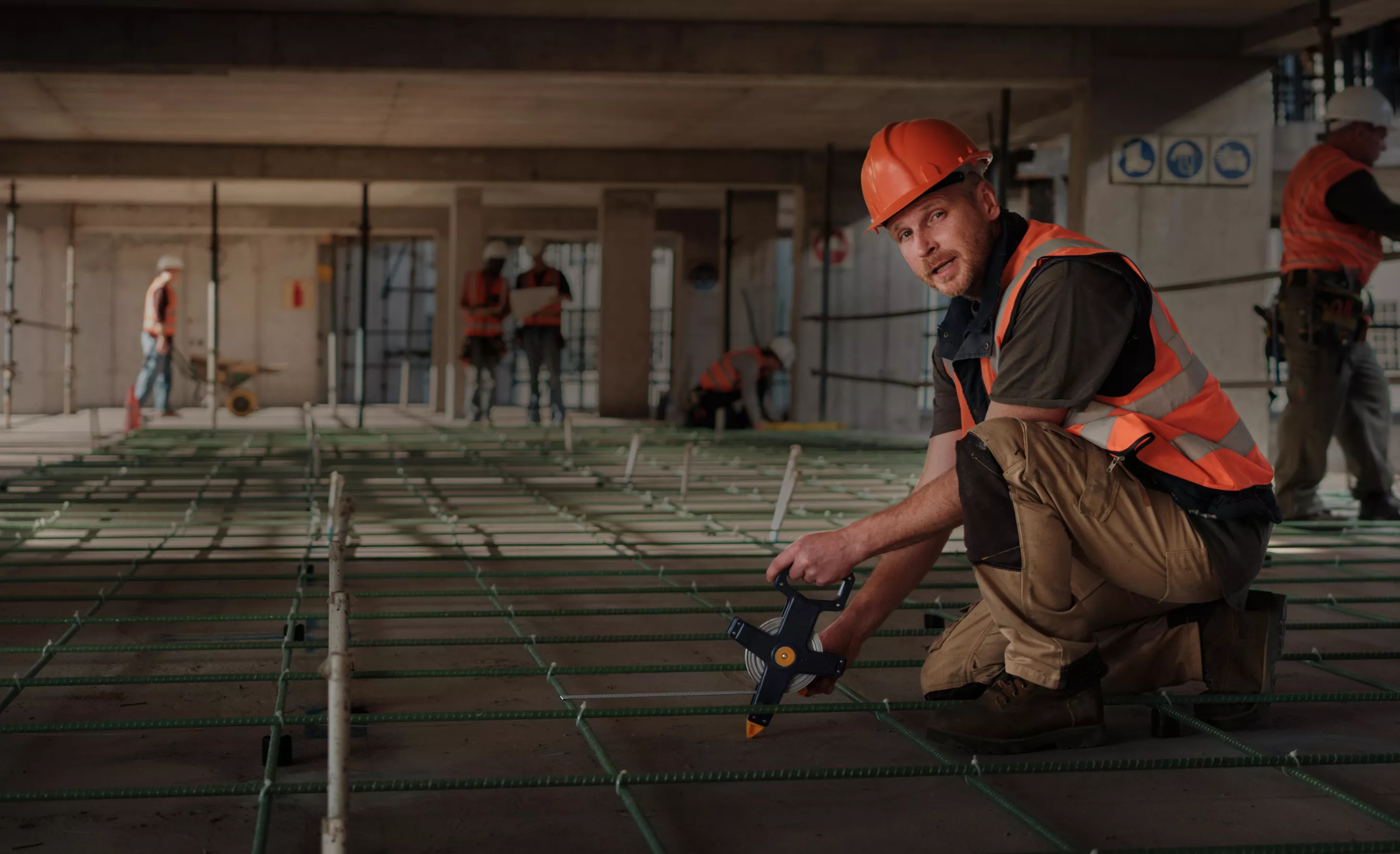
Powered by how
The materials transition: redesigning performance for a new era
Aramco is primarily an energy company with oil and gas production as its primary business.
From the buildings we live in to the vehicles we drive and the products we use every day, materials shape our world. But as global populations rise and urbanization continues, demand for these materials is expected to grow by 30% by 2050.1
But meeting future demand will require more than just scale. It calls for more durable and reliable alternatives.
At Aramco, we see this as a moment of opportunity for society. We’re aiming to use advanced materials—including polymer and carbon-based materials—in our projects and operations. These solutions are often lighter, stronger, and more efficient than many conventional material options.
Our aim is to help reduce carbon footprints, extend product lifespans, and unlock new frontiers in design and performance across applications.
1 World Economic Forum, August 2024.
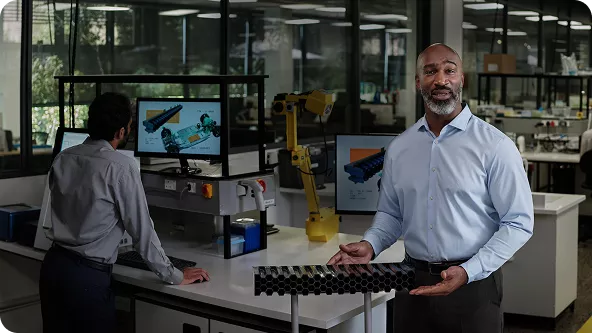
We’re deploying more durable materials to ensure performance in real-world conditions…
In demanding industry sectors, including oil and gas, material choice is important. We are installing polymer-based material such as Reinforced Thermoplastic Pipes (RTP) in applications where they deliver improved performance over conventional steel pipes.
At Aramco, we ensure that these products meet the standards and specifications to support operational performance and emission reduction efforts.

…to ensure the continued reliable delivery of materials that economies depend on.
Reimagining industries through materials
Reducing cost by utilizing advanced materials solutions
Advanced materials deliver major cost advantages, corrosion alone costs the global economy more than $2.5 trillion each year, around 3.4% of global GDP.3 By deploying advanced materials where they offer enhanced lifecycle performance, countries could reduce these losses through improved durability, corrosion resistance, and lower maintenance requirements.
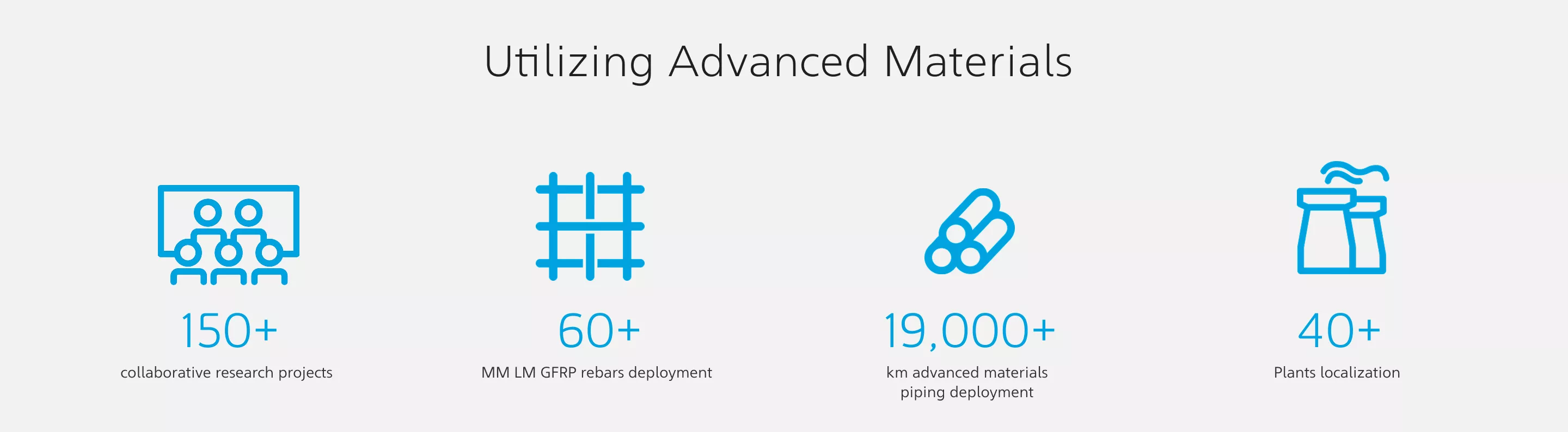
Aramco is leading deployment efforts with more than 19,000 km of advanced materials piping utilized across its facilities in different applications.
In Oil & Gas subsea applications, as an example, utilization of corrosion-resistant flexible composite systems has yielded major project cost savings by optimizing project design and allowing for faster installation. Moreover, the utilization of composite system reduces the need for frequent maintenance during operation.
For onshore applications, utilization of RTP allows for significant cost savings stemmed from the reduced need for corrosion control measures and reduction of maintenance cost in comparison to carbon steel.
To enable advanced materials penetration and ecosystem, Company efforts extend to investments and localization, where Aramco co-established NOVEL Non-Metallic Materials, a joint venture with Baker Hughes, focused on producing RTP, and worked to localize more than 40 facilities for various products.
Through joint partnerships and research and development, Aramco is continuously pushing the envelope of materials to resolve challenges and expand to new applications.
3 Engineer Live, January 2025.
This content is blocked
You need to give permission.
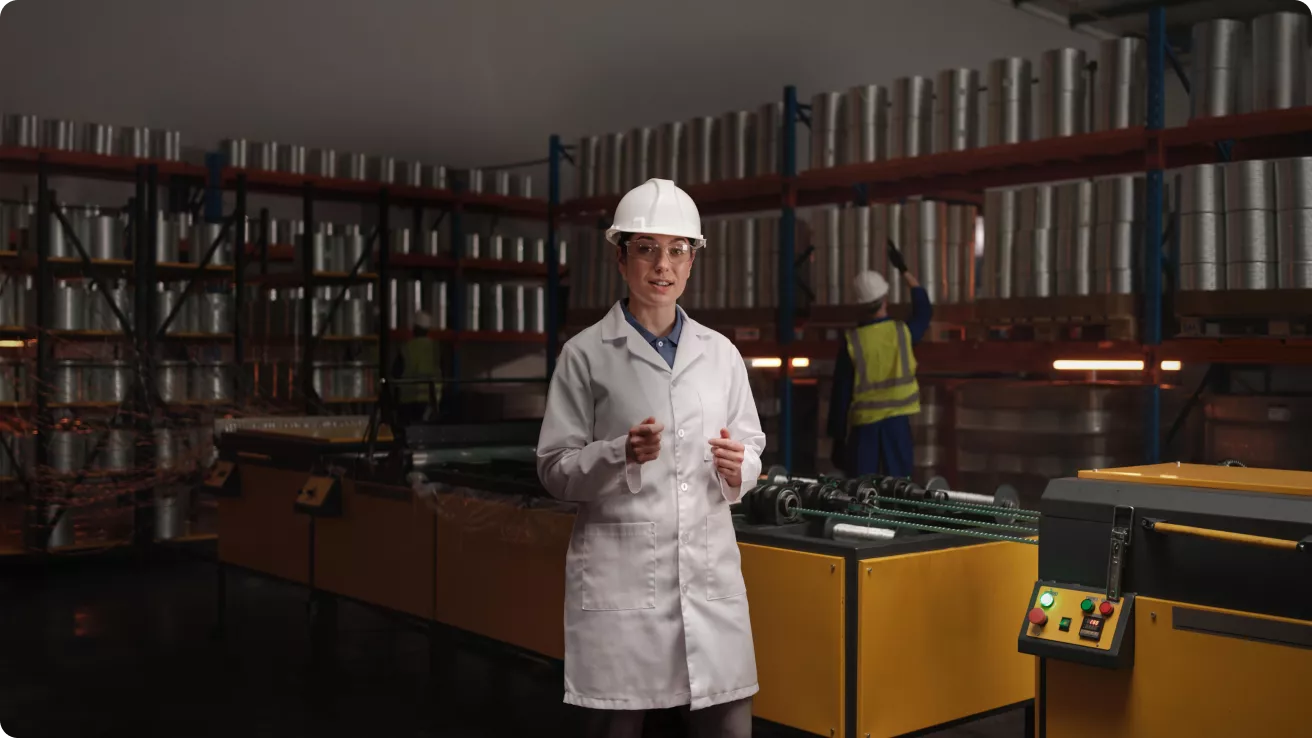
Advanced construction reduced emissions
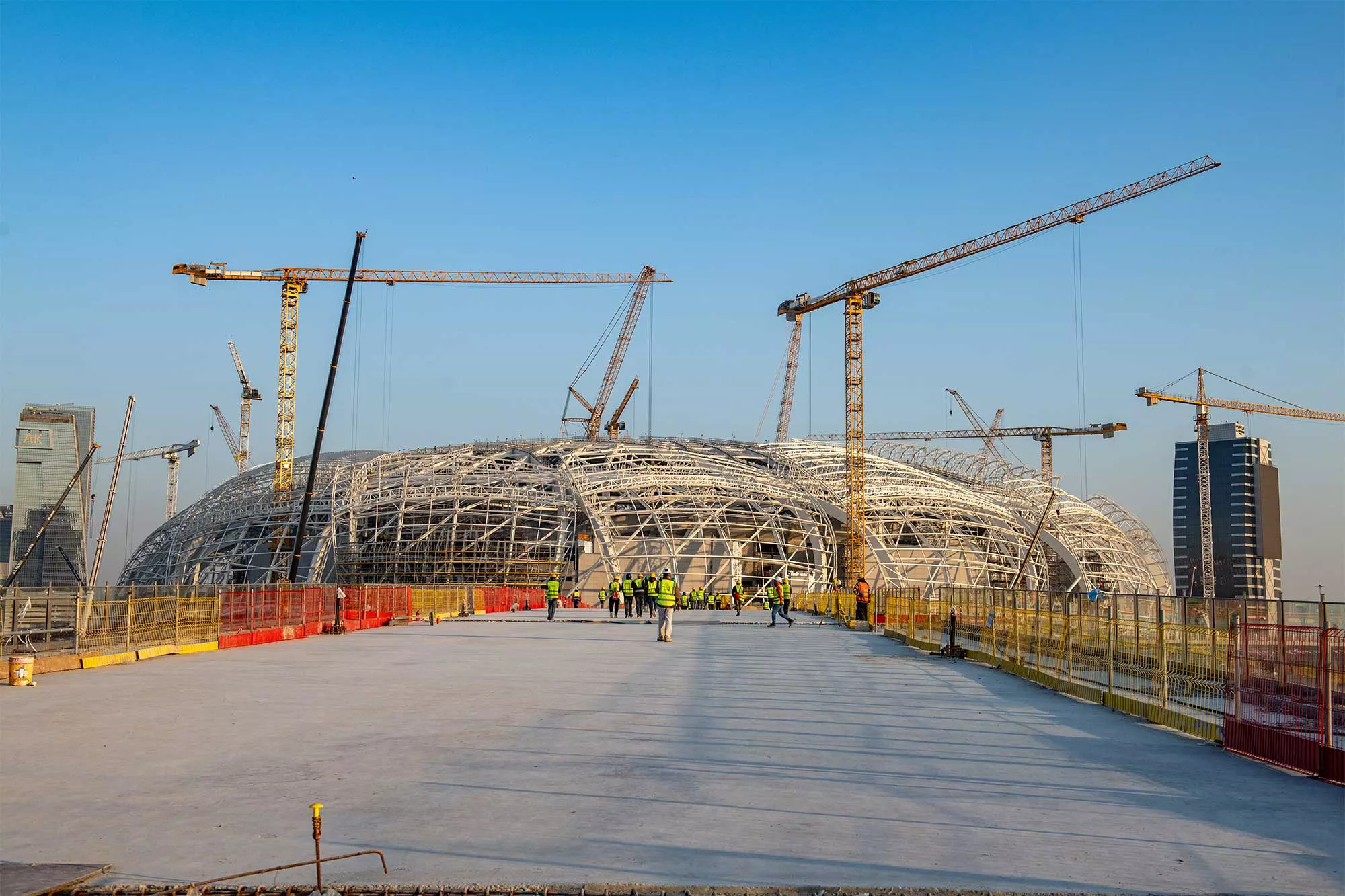
The production and use of construction materials such as steel, aluminum, and cement account for nearly a quarter of global CO2 emissions2 –and the challenge of emissions reduction grows with demand.
By deploying polymer-based solutions, including Glass Fiber Reinforced Polymer (GFRP) rebars, and concrete and asphalt modifiers, we help provide more cost-effective and resilient infrastructure, which could lead to lower carbon emissions across those materials’ lifecycle. As of 2025, we had installed more than 60 million linear meters of GFRP rebars across our projects.
Beyond deployment, Aramco advocacy efforts in collaboration with the Centers of Excellence and international standard bodies, enabled the integration of GFRP rebars in the Saudi Building Code, paving the way for kingdom wide adoption. Demand has also supported the localization of multiple manufacturers to meet development project demands.
2 International Energy Agency, May 2019.
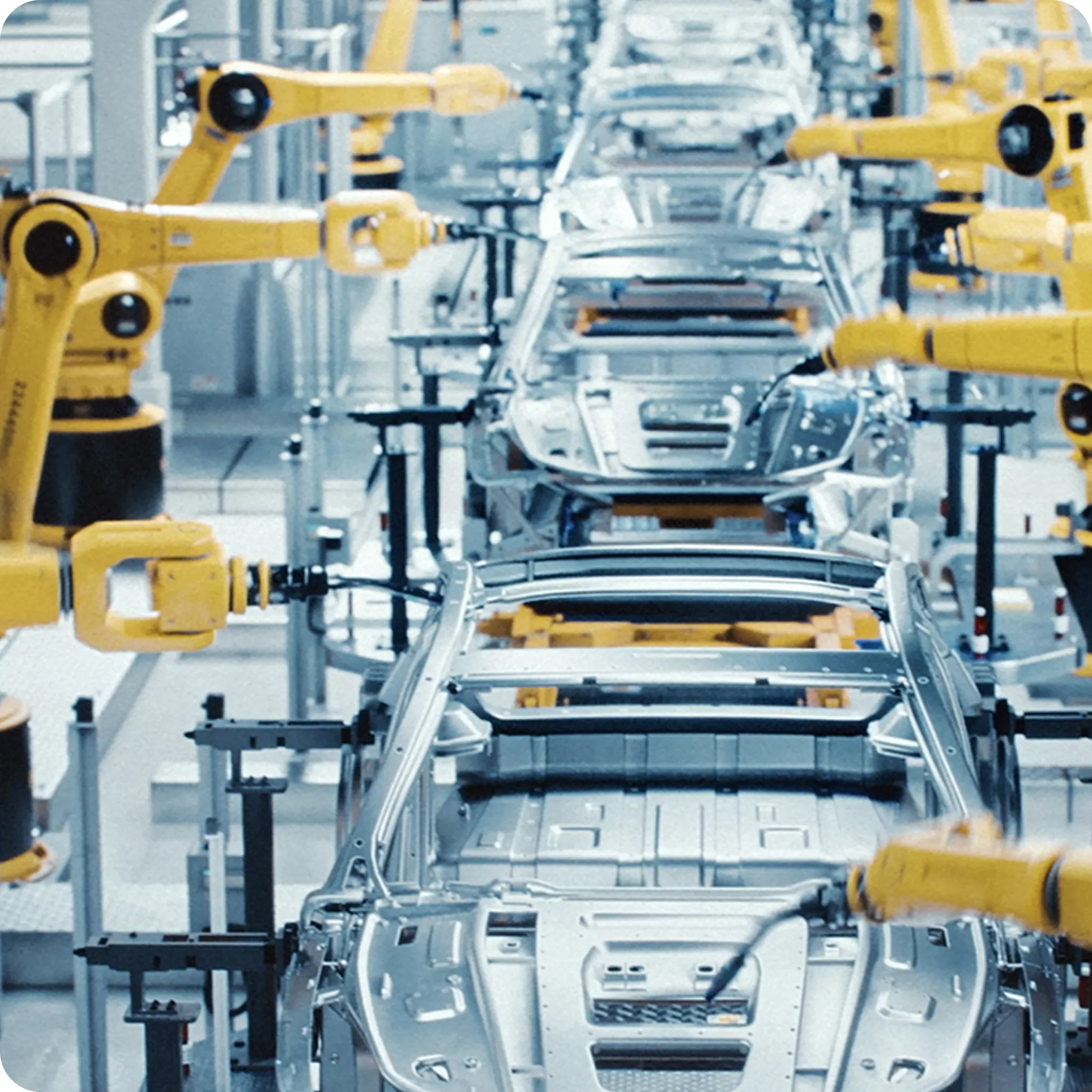
Aiming to support automotive design
Working with global partners, we are helping the automotive industry develop lower-carbon emission solutions. Advanced materials can aim to replace conventional materials helping to reduce vehicle weight.
These materials are especially important for electric vehicles. Applications include battery enclosures, lightweight tailgates, and energy-absorbing protective structures all designed to improve safety, longevity, and performance.
Integrating advanced materials components into public transport—from lightweight structural panels in buses to corrosion-resistant fittings in charging stations—could help improve efficiency and save energy. This supports more reliable, durable infrastructure that communities rely on every day.
Supporting the materials transition
We aim to support the material transition by deploying advanced materials at scale in our projects. Our role spans from innovation, field deployment, and standards leadership. We help set benchmarks for performance, safety, durability and reliability while supporting the growth of local supply chains and technical skills
Working with a global network of partners, innovators, and research institutions, we invest in the advanced materials that support greenhouse gas emissions reduction efforts, help diversify into lower emissions value chain, and support the development of future innovations.
Powered by how
Discover how one simple question - how? - powers everything we do.

How can we help develop an alternative fuel for the future?

How do we deliver the reliable energy that communities need?
How can operational excellence help lower our upstream carbon intensity?

How can supporting female talent accelerate our industry?

How can industrial AI help us optimize our energy operations?