
Efficiency among energy abundance
How we're working to minimize our energy consumption.

- Aramco constantly monitors the energy intensity of its oil and gas operations
- Our energy management program has been in operation since 2000
- One of our largest oil and gas facilities achieved the Company’s highest 2018 energy efficiency score
Modern energy is an integral part of today’s globalized economies and lifestyles, and the past two decades have seen hundreds of millions of people — especially in China and India — gain access to electricity. Energy is opportunity, and in 2019, for the first time since the International Energy Agency (IEA) began quantifying the number of people without access to electricity, the number dropped to below 1 billion.
The demand for crude oil and its innovative refined products and not just to supply energy is expected to continue growing, crude oil, is also the basis for many vital everyday products, including agricultural chemicals, construction and household materials, clothing, and more.
With Climate change among the most significant challenges facing humanity, Aramco knows energy should never be wasted, and its consumption managed. For decades, we have utilized energy efficient technologies and practices aiming to help reduce our energy consumption and greenhouse gas emissions.

Aramco engineer Najma A. Alshakhs verifies the functionality of motor control center breakers and digital relays prior to energization.
Laying out the Company’s strategy for efficient and effective use of energy, Jamil J. Al-Bagawi, Aramco chief engineer, states: “We’re committed to driving energy efficiency and addressing the global emissions challenge.
“We believe we are uniquely qualified to make effective contributions to the overall solution,” said Bagawi. “And we continually monitor the energy intensity of our oil and gas operations.”
Energy intensity of Aramco's In-Kingdom operated facilities (in kBtu, Thousand British thermal units)
118.4
2018
116.3
2017
123.2
2016
124
2015
133
2014
Years of energy efficiency gains
Aramco’s energy management program began in 2000, and over the past 19 years has resulted in approximate cumulative energy savings to date of 227,000 barrels per day (bpd) of oil equivalent, which equates to 25.8 million metric tons of carbon dioxide (CO2).
The Company has a corporate committee to help drive our energy performance in both our industrial and nonindustrial facilities. With 163 energy initiatives implemented during 2018, significant energy efficiency gains were achieved, exceeding the corporate energy intensity target by 4.6%.
Aramco's 2018 energy efficiency performance
Generating impressive company numbers.
8,600
barrels per day oil equivalent saved during 2018.
250,000
barrels per day saved since 2000.
0.97
million tons CO2 reduction during 2018.
25.8
million tons CO2 reduction since 2000.
Cogeneration, a fuel-efficient process producing steam and electric power at the same time, is a more efficient approach to energy generation than a traditional power plant. Aramco is utilizing cogeneration systems to help reduce its dependency on the national electricity grid, with the goal of ultimately reaching electrical power self-sufficiency for our operating plants.
By utilizing the waste heat from our facilities, the Company generates electricity to run our operations, while also helping to lower emissions and reduce our impact on the Kingdom’s power grid.
Achieving the numbers has involved significant effort: some of the tactics include replacing 5,198 V8 car engines with V6 engines, converting 2,921 fuel tankers from steel to aluminum, and replacing 467,000 light bulbs and 8,000 street lights with LEDs.

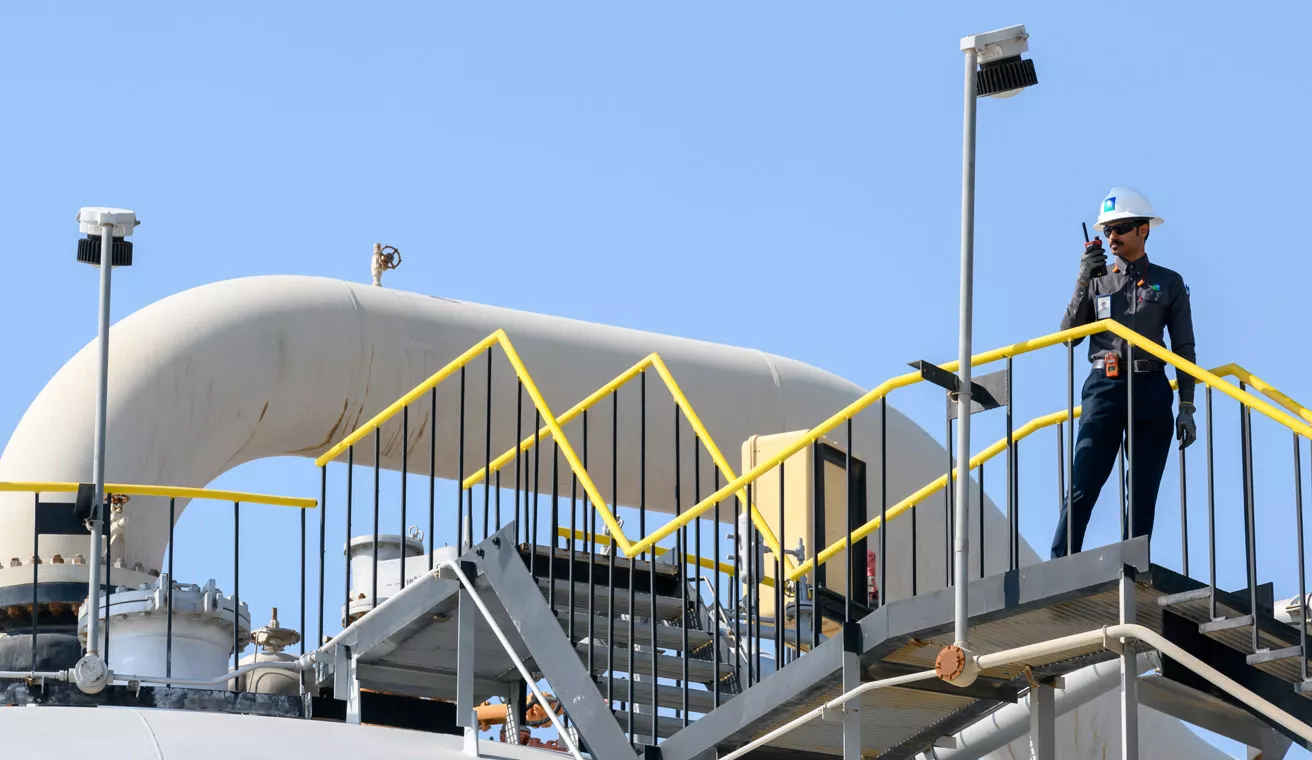
Khurais achieved our highest energy efficiency score.
Khurais records highest 2018 energy efficiency score
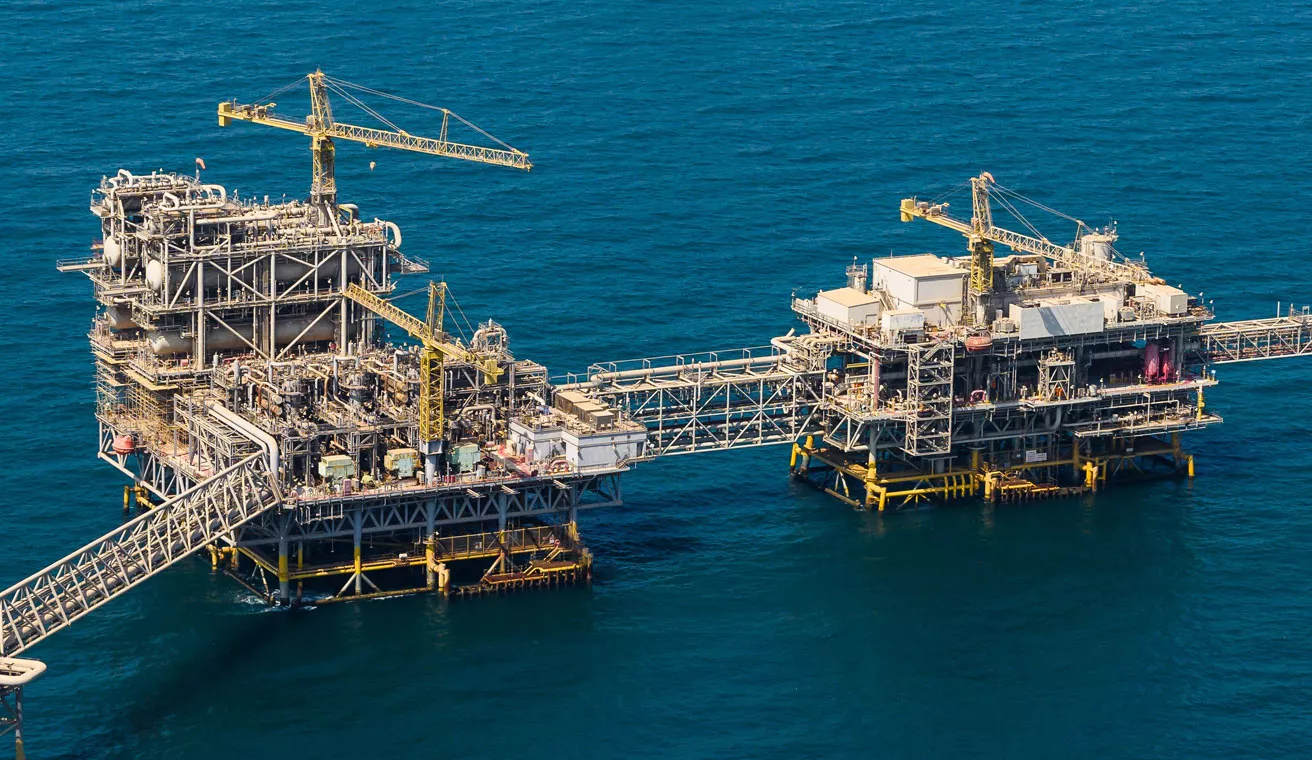
Situated 160 kilometers southeast of Riyadh, Khurais is one of the world’s largest oil producing and processing facilities. Three oil fields — Khurais, Abu Jifan, and Mazalij — lie concealed deep beneath its rocky southern sands.
Khurais operates five oil trains that can produce 1.5 million bpd of Arabian Light crude oil, together with two Central Arabia facilities producing 0.125 million bpd of Arabian Super Light crude oil. And in December 2018, the site received the ISO 50001:2011 energy management system certification from Bureau Veritas.
Aramco’s highest 2018 energy efficiency scores were achieved through a variety of sustained performance strategies. The result was a 14% annual power saving, and in 10% fuel gas saving.
"We share key performance indicators and promote mutual engagement among our employees, which inspires a culture of value creation toward saving energy for the Company, and for the environment."
Mohammed I. Al-Sowayigh, Khurais Producing manager
Loading for optimal performance
Khurais utilizes a performance monitoring tool — developed in-house — to improve its energy performance. The tool, which earned the Frost & Sullivan Manufacturing Leadership Award, can quantify the value of closing an energy efficiency performance gap, provide advice on closing gaps, and help prioritize gap closure efforts.
As supply and demand drive the production capacity of processing facilities, keeping a train fully loaded with product is energy efficient, so Khurais can aim to keep its trains loaded at the optimum level.
“It is simple. If demand is lower, we may shut down one train, to ensure the other trains operate at full capacity,” explains Khurais energy coordinator Kamarul Amminudin.
Khurais also recovers wasted heat from the gas turbines to run seawater injection pumps instead of emitting the heat to the atmosphere. The steam generated from the wasted heat serves as a source of steam for the process, while the auxiliary boilers are used as a contingency for the intricate processing steps to remove water and hydrogen sulfide from the crude products.
Other initiatives include efforts to optimize the anti-surge set point in major compressors to avoid unnecessary recycling that wastes power, preheating boiler feed water to reduce fuel gas consumption from the auxiliary boiler, and deploying “advanced process controls” in the oil wells’ electric submersible pumps to help minimize power consumption.
More from Elements

The information in this article is provided for general informational purposes only and it reflects information available at the time of publication. It may be subject to change, and Saudi Aramco does not undertake any obligation to update or revise this content following publication.